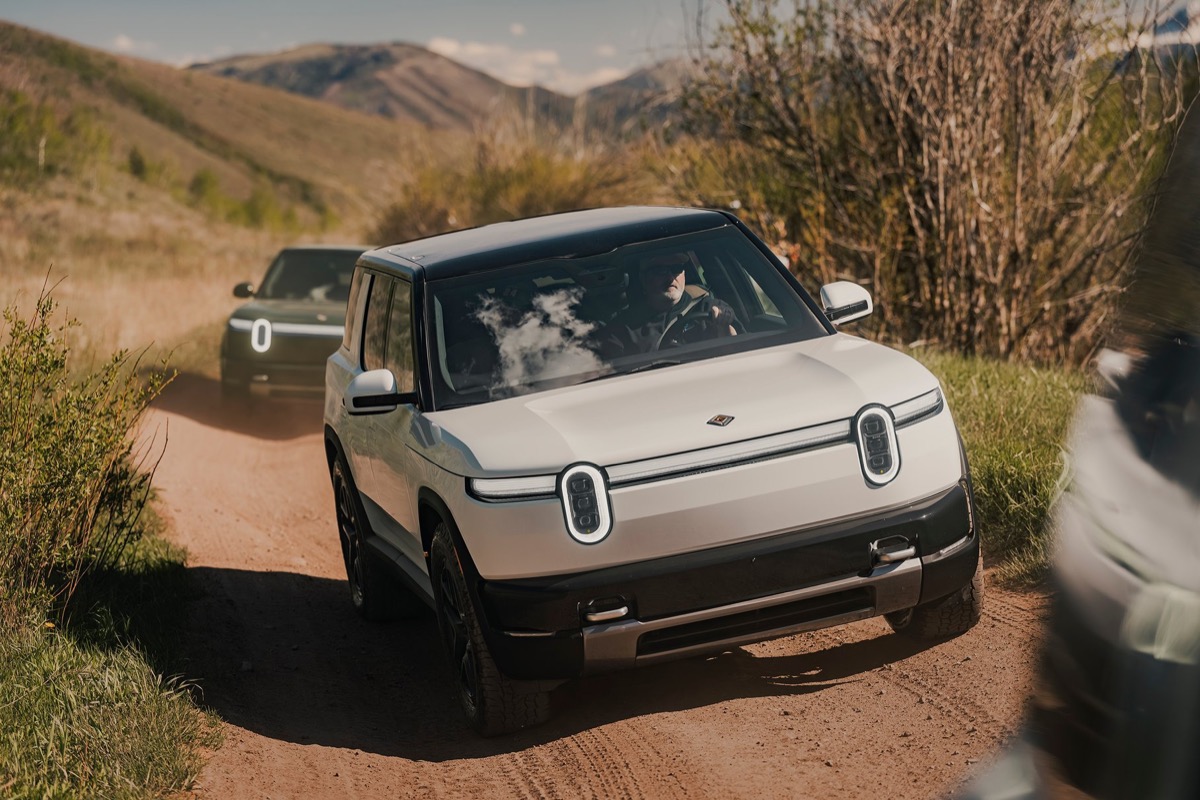
Rivian is making a major push into autonomous driving. CEO RJ Scaringe has presented an ambitious roadmap that puts the company in direct competition with Tesla. Later this year, Rivian plans to introduce fully supervised point-to-point driving for all second-generation vehicles.
Rivian's Autonomous Roadmap
Scaringe outlined a multi-stage plan to equip Rivian's vehicles with increasing autonomous capabilities. In contrast to Tesla's approach, which relies solely on cameras, Rivian uses a combination of cameras, LiDAR, and radar.
Hardware Differences
Technical Foundations
Rivian's second vehicle generation, starting with the R2, features a completely redesigned electrical architecture and a powerful computing platform. It was specifically designed for autonomous driving functions. Scaringe emphasized that Rivian does not want to wait for Level 4 but will roll out functions gradually – similar to Tesla with FSD.
The company has already formed key partnerships, including with NVIDIA for the computing platform. Unlike Tesla, which develops its own hardware (HW3, HW4), Rivian relies on established suppliers.
Competition with Tesla
The direct competition with Tesla FSD is evident. While Tesla has been working on FSD for years and already offers FSD Supervised in North America but is still awaiting UNECE approvals for Europe, Rivian is now launching with a similar offering.
Scaringe sees Rivian's approach as superior, especially in bad weather. "Our system with LiDAR and radar provides an additional layer of safety that pure camera systems don't have," he explained.
Timeline and Availability
Rivian plans to enable supervised point-to-point driving for owners of R2 vehicles later in 2025. Initially only in the US, a European launch is planned for a later date. The autonomous features will be rolled out gradually, starting with highway driving, followed by urban routes.
Unlike Tesla, which is often slow to introduce new features, Rivian promises a faster rollout. "We will not conduct beta tests for years; instead, we will deliver market-ready features that are safe and reliable," said Scaringe.
Impact on the Market
Rivian's move could further intensify competition in the autonomous driving sector. Other manufacturers such as Mobileye are also working on their own robotaxi services. The market is becoming increasingly fragmented, but pressure is mounting on Tesla to finally deliver on its FSD promise.