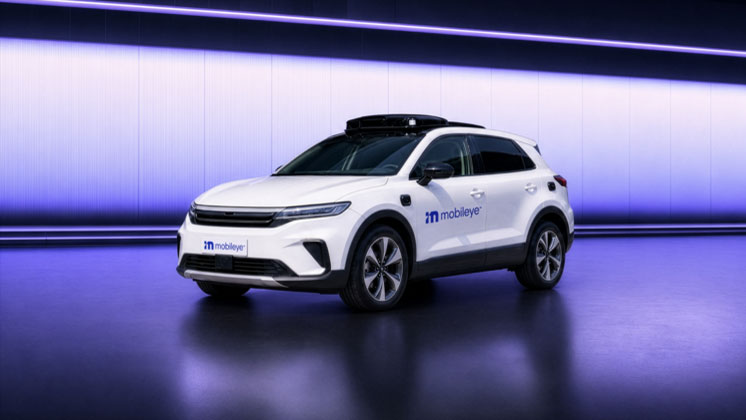
Mobileye to Build Its Own Robotaxis Soon
Until now, Mobileye supplied the "brain" for fully autonomous cars. Now the Israelis want to operate their own ride-hailing service in the US.
Mobileye, previously known primarily as a technology supplier for driver assistance systems and autonomous driving (Mobileye Drive™), is massively expanding its business model. As the Israeli company—majority-owned by Intel—has now announced, it will not only provide technology for other companies like Waymo in the US or Moia in Germany, but will also act as an operator of a robotaxi service to participate in the growing market.
The starting signal for the new initiative is set for 2027 in a major US metropolitan area. Initially, a pilot fleet of around 100 vehicles is planned, which are to operate under completely driverless conditions. If the plan works out, Mobileye wants to scale massively: within five years, about 17,000 additional vehicles are to be added.
Technologically, Mobileye is leveraging synergies within its own group: the Mobileye Drive system is combined with the mobility platform of the subsidiary Moovit. This includes, in addition to vehicle control (AV Mission Control), user applications and integration with teleoperation infrastructures.
With this step, Mobileye enters a highly competitive market where established players like Waymo and Tesla are already waging a hard fight for supremacy.
Studies by various consulting firms such as McKinsey forecast rapid growth for the robotaxi market in the coming decades. Autonomous mobility is considered key to making urban spaces more efficient, reducing transport costs per kilometer, and increasing road safety by eliminating human error.
While in the US and China the "test labs" for driverless mobility in regular operation are already running at full throttle, the German market remains hesitant. Here, it is not primarily technological possibilities that prevent the breakthrough, but regulatory hurdles and a cautious approach to the approval of fully driverless systems without safety drivers. In addition, automakers fear that the growing prevalence of robotaxis could reduce private car purchases.
Mobileye CEO Amnon Shashua emphasizes, however, that the new initiative is not intended to replace, but to complement existing partnerships with automakers. "We see the opportunity for a new approach," says Shashua, who sees direct operation as a complementary way to enter the market, to gain operational experience, and to improve performance.