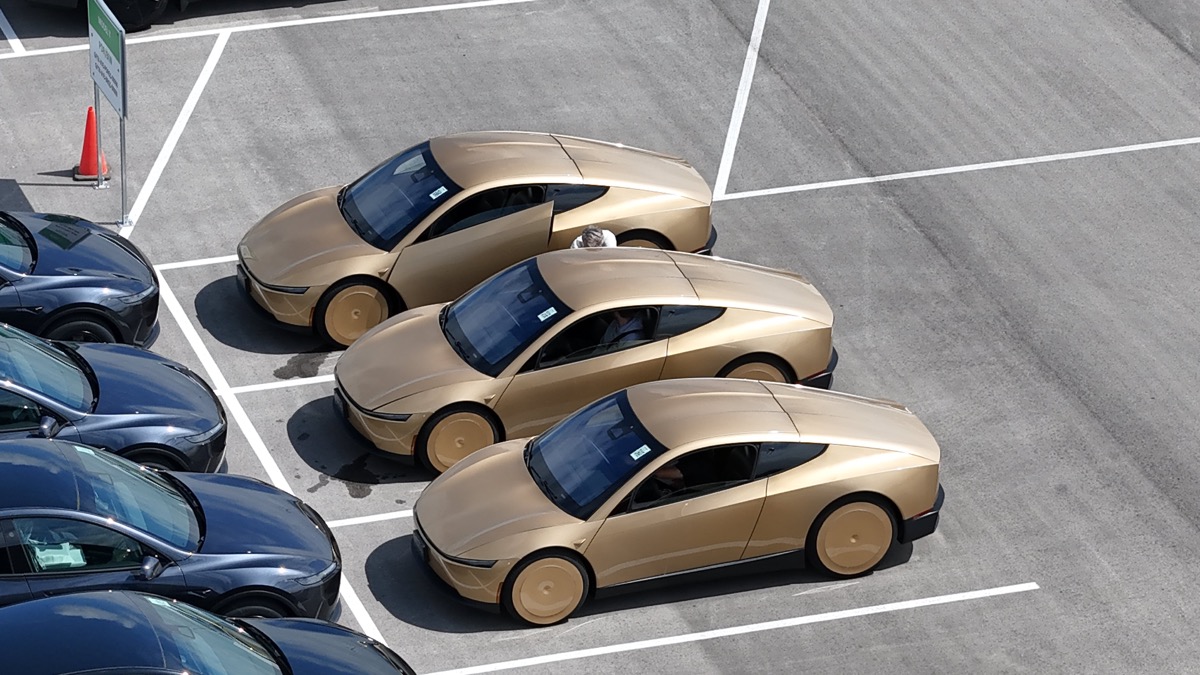
Tesla's long-awaited robotaxi, the Cybercab, has cleared a crucial regulatory hurdle: The US Environmental Protection Agency (EPA) has issued a Certificate of Conformity for the vehicle. This officially paves the way for the introduction of the autonomous robotaxi on the US market as a zero-emission vehicle.
The certification covers both federal emission guidelines and California regulations. This is a significant milestone, as the Cybercab not only meets environmental requirements but also opens the door for commercial deployments.
Technical Specifications in Detail
With the EPA certification, some previously secret technical specifications of the Cybercab were also revealed. The vehicle is equipped with a 48-kWh battery and delivers 163 kW. The curb weight is 1,412 kg. These figures point to an efficient, lightweight vehicle optimized for urban robotaxi operations.
Compared to other Tesla models, the Cybercab emerges as a specialized vehicle:
The figures underscore Tesla's strategy of creating a low-cost, dedicated robotaxi focused on efficiency and low operating costs.
Significance for the Market
The EPA certification is a clear signal that Tesla is serious about its robotaxi strategy. Insiders suggest that production could begin as early as 2025. Elon Musk has repeatedly emphasized that the Cybercab will revolutionize urban transportation.
For more details on the robotaxi's technical data, see our article: Tesla Cybercab: Technical Data Revealed.
Outlook: When Will the Cybercab Come to Europe?
While the EPA approval is promising for the US market, the introduction in Europe remains uncertain. Local regulations are stricter and require separate certifications. Learn more about the regulatory hurdles in Europe in our article: Switzerland Draws a Clear Line on Tesla FSD Supervised.
The future of autonomous driving is at a turning point. The Cybercab could be the catalyst that accelerates widespread acceptance of robotaxis. Further analysis of the competition is available in: Tesla's Robotaxis: A Complete Disaster?.